
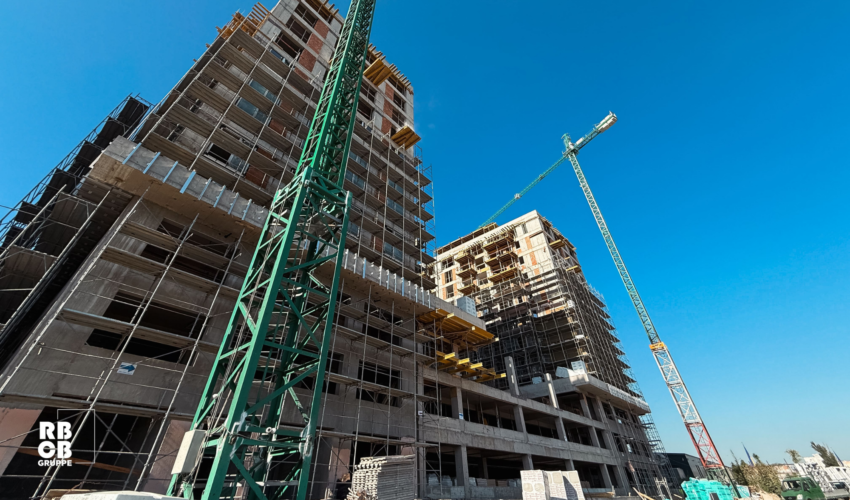
Energy-efficient construction is becoming an increasingly important part of the European construction industry. Across Romania and Germany, new energy performance requirements are changing the way residential, commercial and public buildings are designed and delivered.
For a construction company such as RCBB Gruppe, operating in both Germany and Romania, these changes go beyond regulatory compliance. They influence design coordination, construction methods, technical solutions and, above all, the quality of on-site execution.
What is an nZEB building?
nZEB stands for Nearly Zero-Energy Building and refers to a building with very high energy performance and very low energy demand.
In practice, an energy-efficient building combines several elements:
- high-performance thermal insulation;
- reduced thermal bridging;
- high-quality building envelopes and windows;
- efficient heating, cooling and ventilation systems;
- renewable energy solutions;
- accurate construction detailing;
- consistent quality control during execution.
Energy performance therefore does not depend on one technology alone. It results from the way architecture, structural works, technical systems and construction execution work together.
nZEB requirements in Romania
Romania introduced nearly zero-energy building requirements as part of its national framework for the energy performance of buildings.
New buildings must comply with requirements relating to primary energy consumption, carbon emissions and the contribution of renewable energy sources.
The applicable limits vary according to building type, climatic conditions and technical characteristics.
For construction companies, this means energy performance cannot be treated only as a design issue. It must also be protected throughout the construction process.
Energy-efficient buildings in Germany
Germany uses a different approach to assess building energy performance.
For new buildings, energy efficiency is evaluated against a reference building and through indicators such as annual primary energy demand.
As a result, the percentages and thresholds used in Romania and Germany cannot simply be compared with one another. They refer to different indicators and different calculation methods.
What matters most is the final performance of the building: lower energy consumption, reduced losses and long-term energy efficiency.
Why construction quality matters
A well-designed energy-efficient building can still underperform if the construction work is not executed correctly.
Thermal bridges, inadequate junctions, air leakage or poor coordination between construction disciplines can significantly affect the building’s energy performance.
For a construction company, energy-efficient construction therefore also requires:
- accurate implementation of technical details;
- coordination between site teams;
- quality assurance;
- careful sequencing of construction works;
- cooperation between designers, engineers and construction teams.
Execution quality is one of the key factors that determines whether the intended performance of the building is actually achieved.
Sustainable construction and residential projects
Sustainable construction involves more than reducing energy consumption.
It also includes efficient use of materials, reduction of waste, effective site organisation and the delivery of durable buildings with strong long-term performance.
RCBB Gruppe is a construction company operating in Germany and Romania, delivering projects across residential construction, civil construction, infrastructure and specialised construction works.
Working across two European construction markets allows RCBB teams to follow how technical standards and sustainability requirements are reshaping the industry.
RCBB residential development in Iași
In Romania, RCBB is developing its own residential project in Păun, Iași, where energy-efficient and sustainable construction principles form part of the development approach.
The project also creates an opportunity to apply solutions that address both energy performance and long-term construction quality.
The future of construction is energy efficient
Energy performance requirements will continue to influence the construction industry over the coming years.
For developers, designers and construction companies, the challenge is not simply to comply with regulations, but to translate technical requirements into efficient, durable and well-executed buildings.
For RCBB, sustainable construction means combining technical performance, reliable execution and responsible resource management across projects in Germany and Romania.